Video: An Art, A History, 1965–2005

Isaac Julien. Baltimore, 2003. Audiovisual installation. Courtesy of the Musée national d’art moderne Collection, Centre Pompidou.
Video: An Art, A History, 1965–2005
Miami Art Central, September 20 – December 10, 2006 The exhibition Video: An Art, A History, 1965–2005, organized by the Centre Pompidou’s New Media Collection presents an international survey of the evolution of video and multimedia art over four decades, mapping its influence across major developments in contemporary art from 1965 to 2005. The exhibition provides an overview of how video—initially a tool for documenting performances—emerged as a distinct artistic medium and has since become integral to global contemporary practice.
Miami Art Central’s presentation includes video, sculpture, and multimedia installations in a chronological conversation about the medium, highlighting the dialogue between pioneering video works from the 1960s and 1970s and those by younger contemporary artists. Complementing the artworks on view, archival materials from the Centre Pompidou—including scripts, drawings, film stills, and artist interviews—offer critical historical context to this seminal exhibition.
“The Moon is the oldest TV,” said pioneering artist Nam June Paik (Seoul, Korea, 1932), who in 1963 first introduced a television-based artwork into a museum space. Just two years later, he created Moon is the Oldest TV, recreating the lunar cycle through seventeen television sets placed on pedestals in a darkened room. Each screen displayed a different moon phase, altered by a magnet in the cathode ray tube. This groundbreaking work—marking the earliest piece in the exhibition—laid the conceptual and technological foundation for decades of video experimentation to follow.
The trajectory of video art encompasses a wide range of formal and conceptual strategies. In the 1970s, video emerged as a more accessible alternative to film, drawing on the immediacy and democratic nature of television. Artists like Dara Birnbaum used it to critique mass media and probe issues of identity and representation, while others experimented with feedback, slow motion, closed-circuit systems, and performative gestures. By the 1980s, video had become a dominant force within the broader category of "new media," a term coined to describe its expanding role.
In the 1990s and 2000s, artists began incorporating cinematic language, narrative structures, and immersive installation formats that emphasized the viewer's active role. Figures such as Douglas Gordon, Pierre Huyghe, and Isaac Julien pioneered new ways of integrating moving image, space, and sound to transform perceptual experience. While technological innovation, theatricality, and interactivity characterize many recent works, this exhibition foregrounds those artists whose practices reflect global concerns and explore complex relationships between form and content.
Structured in five thematic sections—Imaginative Television, Quests for Identity, From Video Tape to Installation, Post-Cinema, and Contemporary Perspectives—the exhibition explores the nature of the television medium, the role of the viewer, the status of the artist, and the fluid boundaries between fiction and documentary. Spanning forty years of experimentation, it brings together 37 key works, from early, resource-constrained productions to recent installations utilizing sophisticated audiovisual technologies.
ARTISTS IN THE EXHIBITION
Vito Acconci (USA), Samuel Beckett (Ireland), Dara Birnbaum (USA), Peter Campus (USA), Stan Douglas (Canada), Valie Export (Austria), Jean-Luc Godard (France), Douglas Gordon (U.K./USA), Dan Graham (USA), Johan Grimonprez (Belgium/USA), Clarisse Hahn (France), Gary Hill (USA), Pierre Huyghe (France/USA), Isaac Julien (U.K.), Thierry Kuntzel (France), Matthieu Laurette (France), Mark Leckey (U.K.), Chris Marker (France), Bruce Nauman (USA), Marcel Odenbach (Germany), Tony Oursler (USA), Nam June Paik (Korea/USA), Walid Ra’ad / The Atlas Group (Lebanon/USA), Zineb Sedira (France/U.K.), Bill Viola (USA).

1 
2 
3 
4 
5 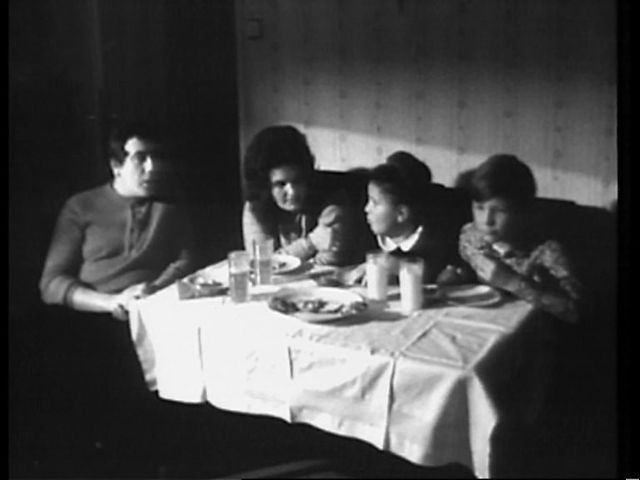
6 
7 
8 
9 
10 
11 
12 
13 
14 
15 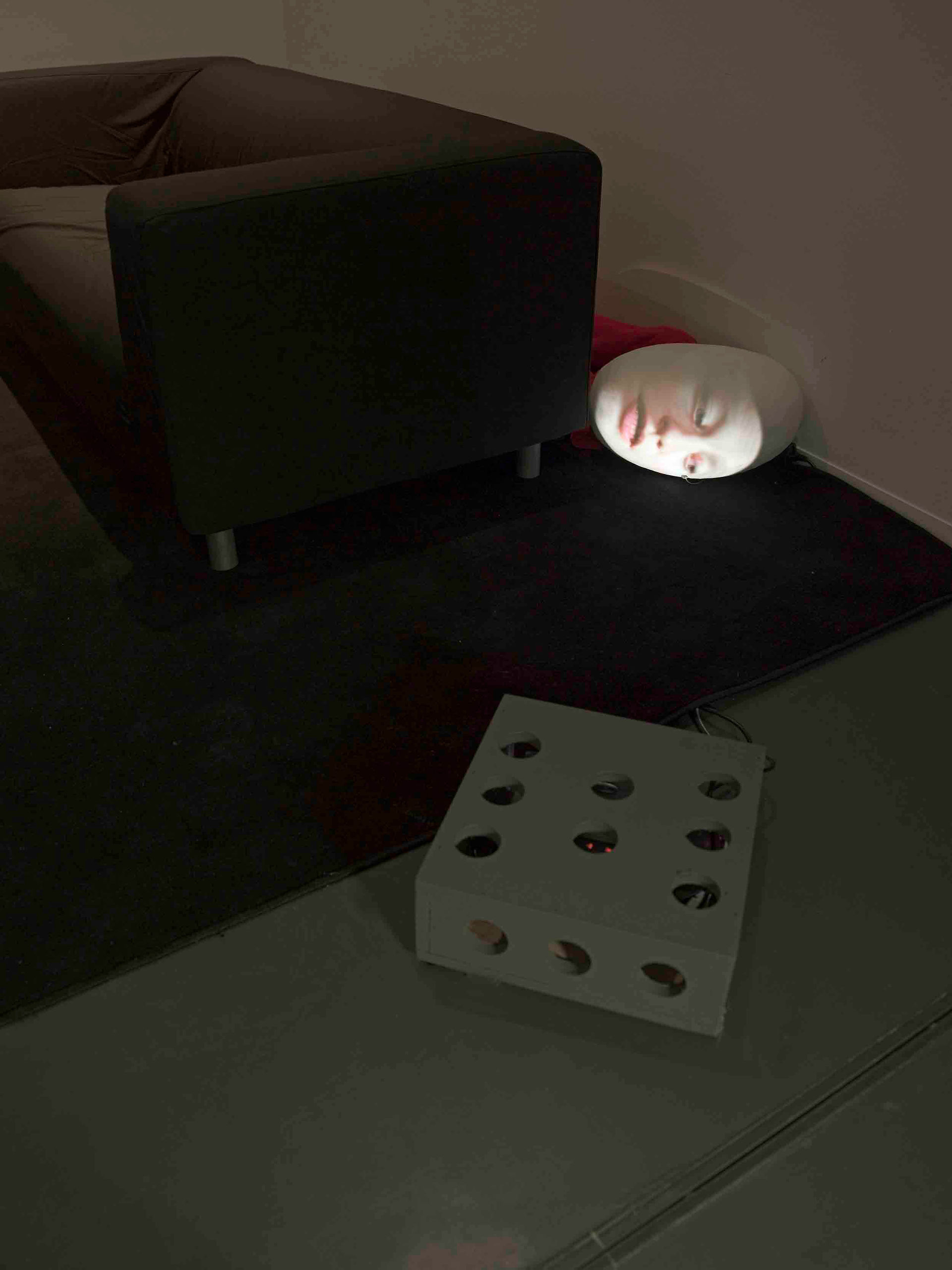
16 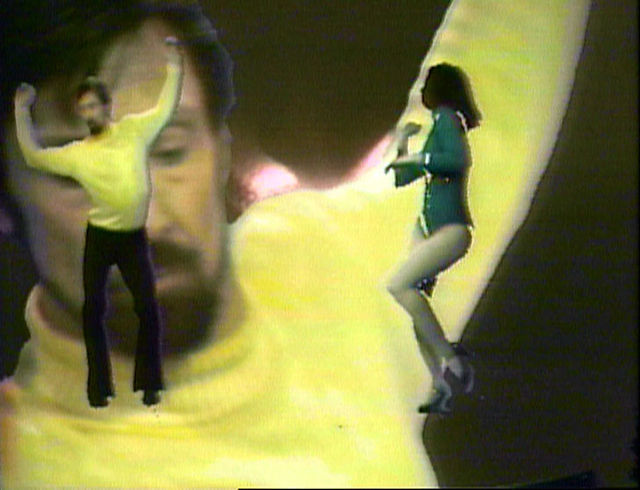
17 
18 
19 
20 
21 
22 
23
Photo Credits
Peter Campus. Interface, 1972. Closed circuit video installation
Courtesy of the Musée national d’art moderne Collection, Centre Pompidou.
Peter Campus. Interface, 1972. Closed circuit video installation
Courtesy of the Musée national d’art moderne Collection, Centre Pompidou.
Stan Douglas. Hors-Champs, 1992. Installation
Courtesy of the Musée national d’art moderne Collection, Centre Pompidou.
Stan Douglas. Hors-Champs, 1992. Installation
Courtesy of the Musée national d’art moderne Collection, Centre Pompidou.
Valie Export. Facing a Family, 1971. Videotape, PAL, black & white, sound, 4’44
Courtesy of the Musée national d’art moderne Collection, Centre Pompidou.
Valie Export. Facing a Family, 1971. Videotape, PAL, black & white, sound, 4’44
Courtesy of the Musée national d’art moderne Collection, Centre Pompidou.
Jean-Luc Godard. Scénario du Film Passion, 1982. Videotape, PAL, colour, sound, 53’24, (English subtitles)
Courtesy of the Musée national d’art moderne Collection, Centre Pompidou.
HAHN_Protestants,still
HAHN_Protestants,still
Isaac Julien. Baltimore, 2003. Audiovisual installation.
Courtesy of the Musée national d’art moderne Collection, Centre Pompidou.
Isaac Julien. Baltimore, 2003. Audiovisual installation.
Courtesy of the Musée national d’art moderne Collection, Centre Pompidou.
Isaac Julien. Baltimore, 2003. Audiovisual installation.
Courtesy of the Musée national d’art moderne Collection, Centre Pompidou.
Isaac Julien. Baltimore, 2003. Audiovisual installation.
Courtesy of the Musée national d’art moderne Collection, Centre Pompidou.
Isaac Julien. Baltimore, 2003. Audiovisual installation.
Courtesy of the Musée national d’art moderne Collection, Centre Pompidou.
Matthieu Laurette. Apparitions - (Sélection, 1993-1995) Appearances – (1993-1995 Selection), 1995.
Courtesy of the Musée national d’art moderne Collection, Centre Pompidou.
Tony Oursler. SWITCH, Twins (Philosopher), 1996. Mixed media installation.
Courtesy of the Musée national d’art moderne Collection, Centre Pompidou.
Nam June Paik. Global Groove, 1973. Videotape, NTSC, Colour, sound, 28’
Courtesy of the Musée national d’art moderne Collection, Centre Pompidou.
Nam June Paik. Global Groove, 1973. Videotape, NTSC, Colour, sound, 28’
Courtesy of the Musée national d’art moderne Collection, Centre Pompidou.
Nam June Paik. Global Groove, 1973. Videotape, NTSC, Colour, sound, 28’
Courtesy of the Musée national d’art moderne Collection, Centre Pompidou.
Nam June Paik. Global Groove, 1973. Videotape, NTSC, Colour, sound, 28’
Courtesy of the Musée national d’art moderne Collection, Centre Pompidou.
Nam June Paik. Global Groove, 1973. Videotape, NTSC, Colour, sound, 28’
Courtesy of the Musée national d’art moderne Collection, Centre Pompidou.
Nam June Paik. Moon is the Oldest TV, 1965 -1992. Video installation Courtesy of the Musée national d’art moderne Collection, Centre Pompidou.
Bill Viola. Reserve Television, 1983-1984. Videotape, NTSC, colour, mute, 44 sequences of 30”. Courtesy of the Musée national d’art moderne Collection, Centre Pompidou.
Curated by Christine Van Assche, Media Arts Curator at the Centre Georges Pompidou, Video: An Art, A History, 1965–2005 is presented with the generous support of the Cisneros Fontanals Art Foundation, Porsche Cars North America, Inc., and Deutsche Bank. Additional support is provided by the Miami-Dade County Department of Cultural Affairs, the Cultural Affairs Council, the Mayor, the Miami-Dade Board of County Commissioners, and the Cowles Charitable Trust.